
treinadorjosielfit.netlify.app
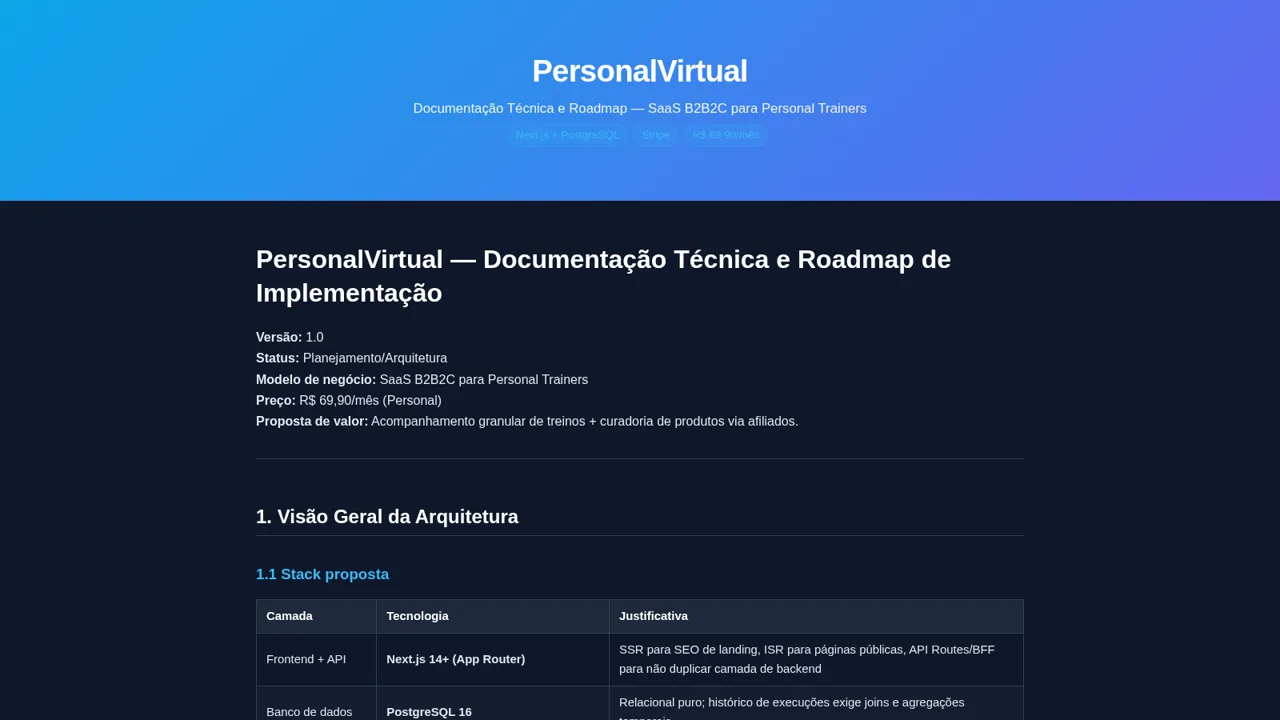
A detailed engineering blueprint for building a subscription fitness SaaS for personal trainers and their students.
PersonalVirtual is a Portuguese-language technical document for a planned B2B2C SaaS product. It defines how personal trainers would manage students and workouts while students access daily training through secure public tokens. The page specifies a Next.js, PostgreSQL, Prisma, Auth.js, and Stripe stack; lays out relational models and API routes; describes desktop and mobile interface structures; and explains subscription controls, workout completion logic, adherence analytics, affiliate recommendations, compliance, delivery phases, and project risks. It is an architecture and roadmap artifact rather than a working product dashboard.
Highlights
End-to-end blueprint
Architecture through roadmap
Concrete data model
Full Prisma schema shown
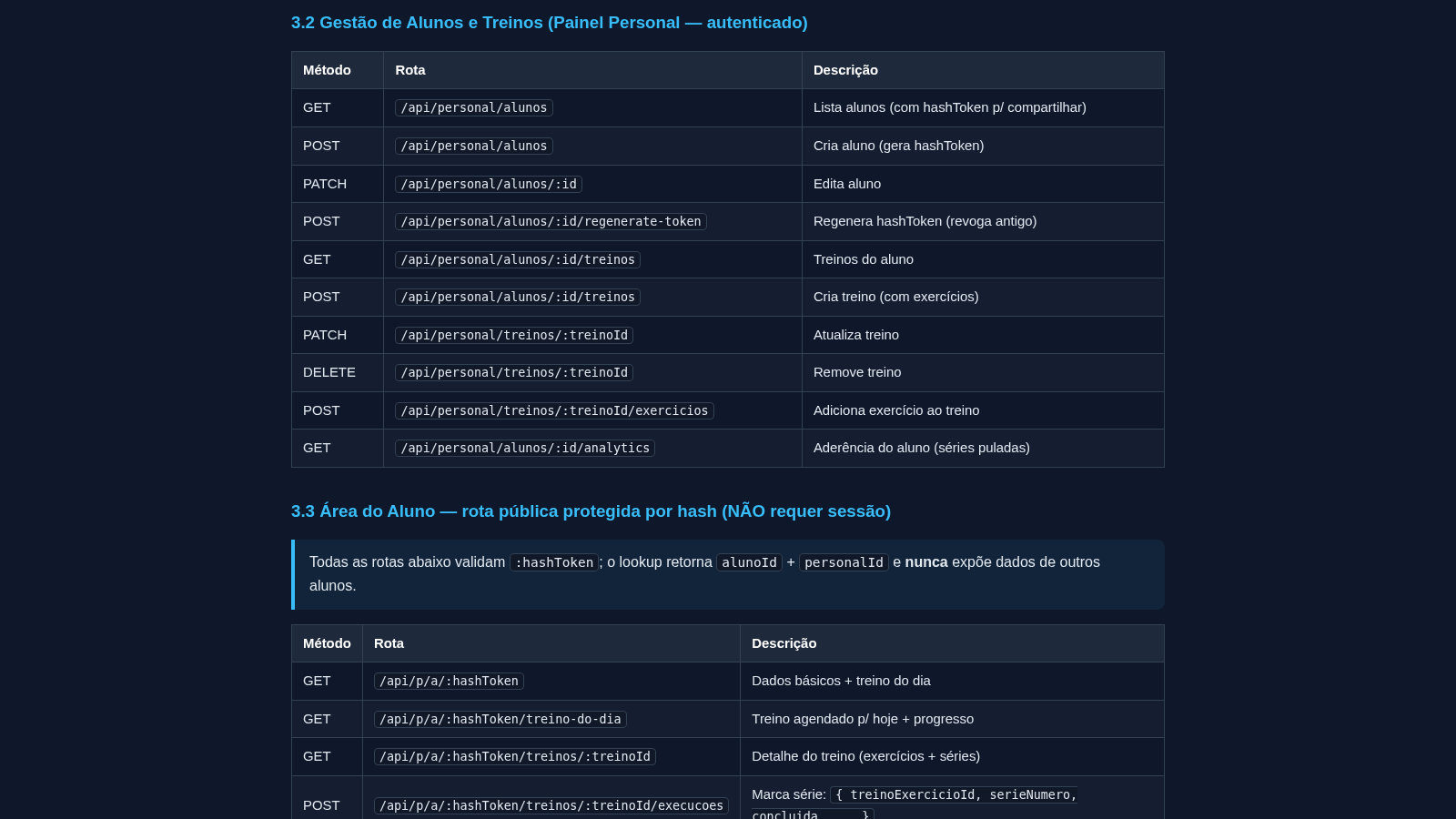
API route catalog
Trainer and student flows
Payment lifecycle
Stripe events and access
Applied examples
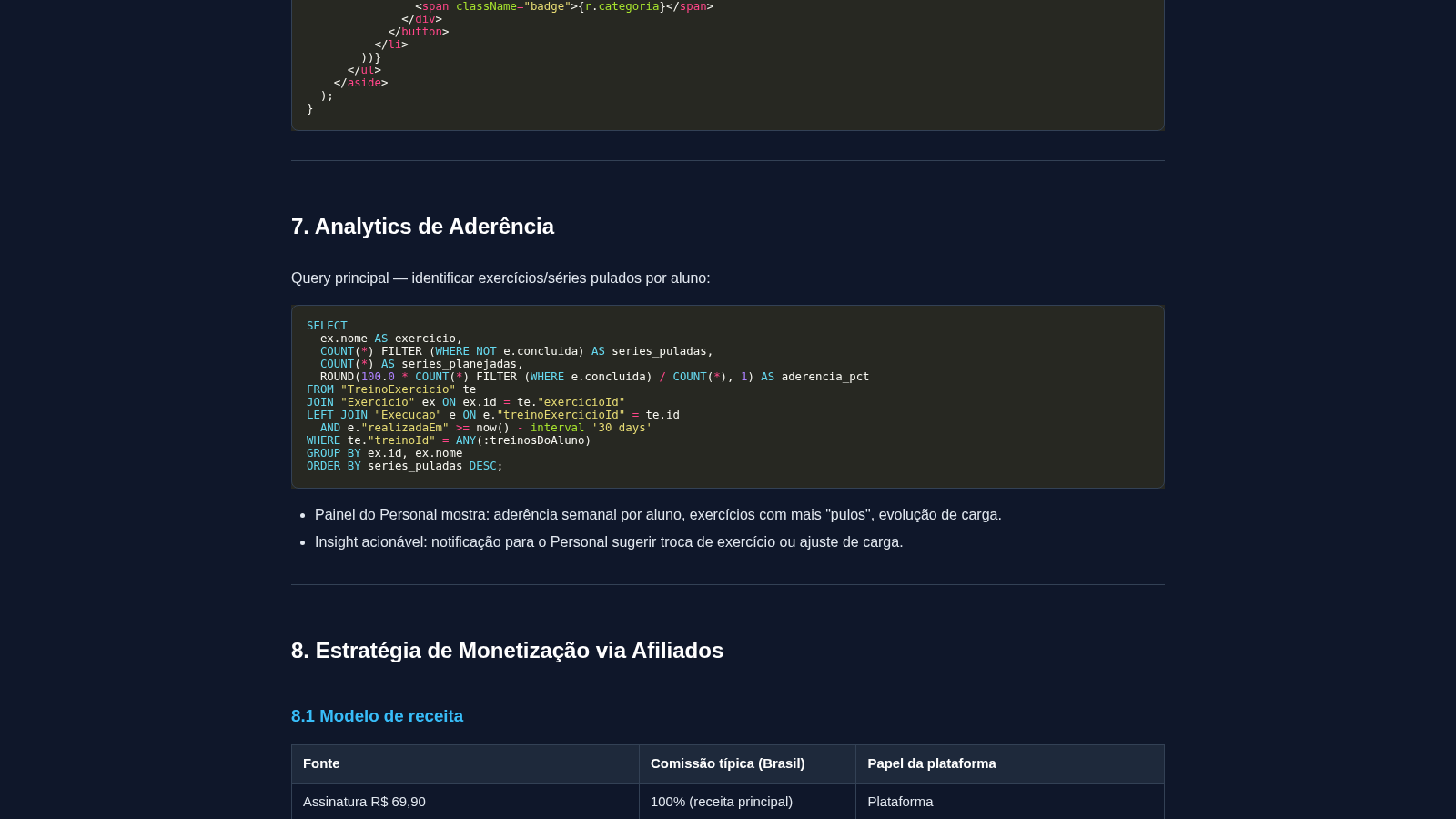
TypeScript and SQL samples
How to Use
Review the system foundation
Start with the architecture overview to understand the proposed technology stack, monorepo layout, authorization boundaries, and the separation between the trainer dashboard and token-based student area.
Trace data and API responsibilities
Continue through the Prisma schema and API catalog to see how trainers, students, workouts, exercises, executions, subscriptions, recommendations, and affiliate clicks relate to one another and which routes manage each workflow.
Study product and payment flows
Use the frontend structure and Stripe sections to connect interface responsibilities with checkout, webhook synchronization, trial handling, failed payments, and server-side access checks.
Apply the implementation guidance
Read the TypeScript and SQL examples as starting references for workout progress, recommendation rendering, and adherence reporting, then map the phased roadmap and risk mitigations to the planned delivery process.
Similar Sites
 21
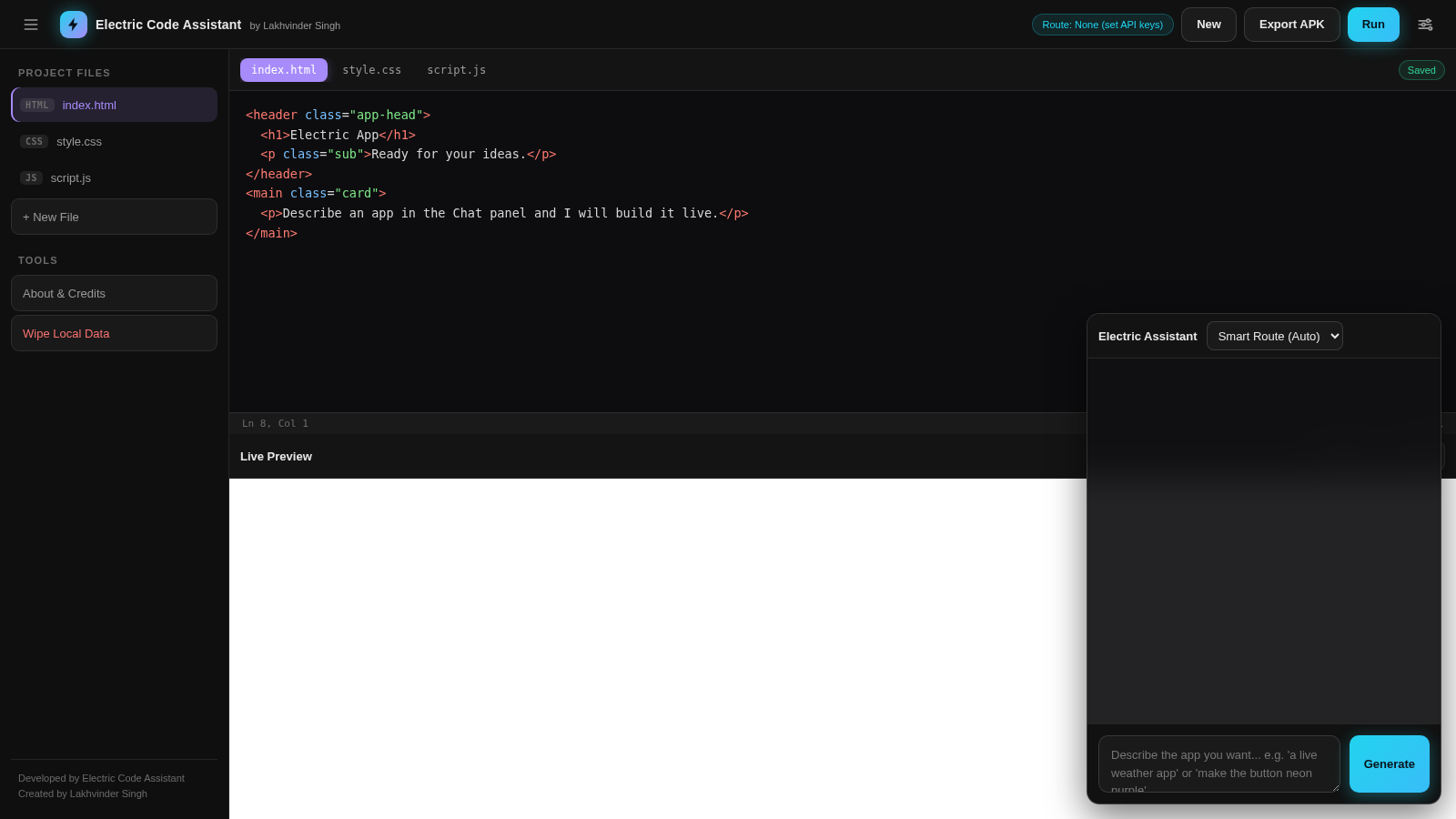
21Electric Code Assistant
Ultra-lightweight AI web IDE: build apps with AI, live preview, APK export
 6
6Device Farm - Testes de Apps
Simule celulares com Android completo e controle vários de uma vez.
 3
3PROMPTORA
Build, refine, test, and manage advanced AI prompts in a guided studio.
 73
73MonkeyCode AI Workspaces
AI coding workspaces for engineering teams
 31
31ComposeLens
Visual Docker Compose inspector with graphs and security warnings
 21
219Router - AI Router
FREE AI coding router with auto-fallback, RTK token saving, 40+ providers